
Property Taxes in Scripps Ranch, San Diego, CA: Rates, Bills, and Exemptions
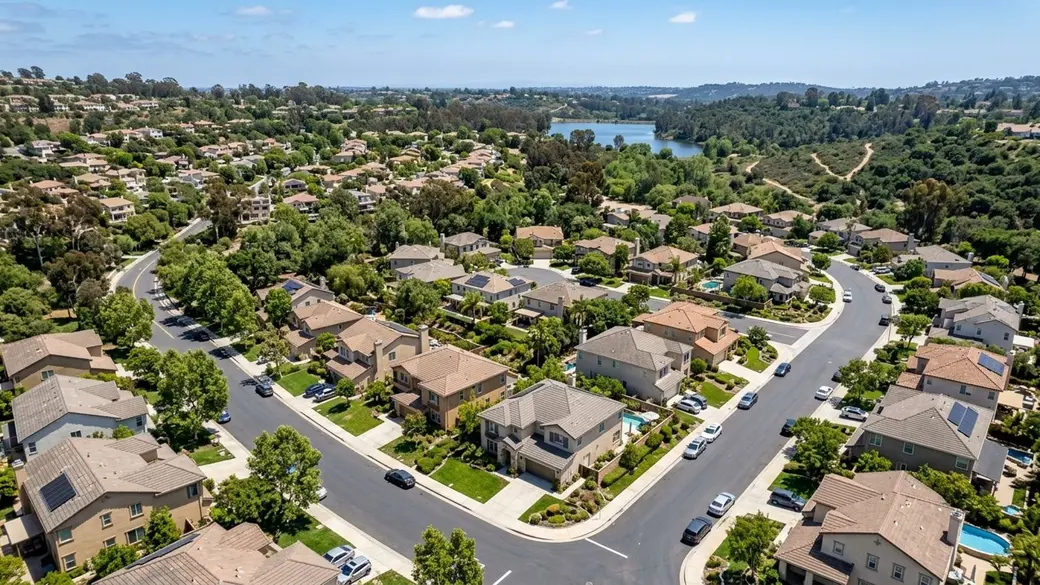
The median sale price for homes in the Scripps Ranch, San Diego housing market sits around $1,322,000 as of mid-2026, and properties are spending roughly 25 days on the market before going under contract. At that price point, your property tax bill isn't a rounding error - it's a real line item in your monthly budget, and you need to know what you're getting into before you close.
California structures property taxes differently than most states. Rather than swinging with annual market shifts, your bill in Scripps Ranch, San Diego, CA is anchored to your purchase price and the specific district bonds attached to that parcel. Get familiar with how those local assessments work, and you'll budget accurately. Ignore them, and your escrow payment will surprise you.
Property Tax Rates in Scripps Ranch
Like most properties in San Diego, homes in Scripps Ranch carry a base property tax rate of 1% of assessed value under California's Proposition 13. There's no single official rate published exclusively for the Scripps Ranch neighborhood - the final bill depends on the specific tax rate area and any local subdivision bonds tied to that address.
Once you layer in voter-approved bonds and special district charges, the effective property tax rate in Scripps Ranch typically lands between 1.1% and 1.3%. That percentage applies to the home's assessed value, which resets to your purchase price the day you buy. Rates vary slightly from street to street, so verify the exact bond obligations on any specific listing before you rely on an estimate.
Comparing Rates Across the County and State
California's statewide effective property tax rate runs about 0.71% - lower than the national average, which hovers around 0.90% to 0.92%. That state figure is pulled down by long-term homeowners whose assessed values haven't moved much in decades, so it doesn't tell you much about what you'll actually pay as a new buyer.
Within San Diego County, the numbers depend on which source you're reading. Some county-level data shows a median effective rate of about 1.19% to 1.22%; Census-based calculators put it closer to 0.68% to 0.74%. Most local guides suggest expecting an all-in bill of about 1.02% to 1.25% of assessed value once voter-approved bonds are factored in. The Scripps Ranch range of 1.1% to 1.3% fits squarely in that picture.
How Your Property Tax is Calculated
Proposition 13 caps the general property tax rate at 1% of a home's assessed value and limits annual increases to a maximum of 2% per year, regardless of what the market does. For long-term owners, that creates real predictability. For you as a buyer, it means the clock resets at closing.
When you purchase a home in Scripps Ranch, the county reassesses the property based on your purchase price. Buy at the current median of approximately $1,322,000, and that becomes your new base assessed value. From there, the taxable value grows slowly - while the actual market can outpace it significantly over time.
Estimating the Tax on a Typical Home
Apply the typical 1.1% to 1.3% effective rate to the purchase price and you'll have a working estimate. On a home bought for $1,322,000, an effective rate of 1.2% puts the annual property tax bill at about $15,864 - covering the 1% base rate plus standard local bonds.
Your preliminary title report during escrow is where you confirm the real number. That document details the exact tax rate area and any active bonds on the property, and your lender will use those specific figures to calculate your monthly escrow requirement. Don't skip that review.
Sales Tax in Scripps Ranch
The combined sales tax rate for ZIP code 92131, which covers Scripps Ranch, is 7.75%. That breaks down as the 6% California state rate, a 0.25% San Diego County rate, and a 1.5% special district tax.
If you're budgeting for a move, that 7.75% adds up fast on furniture, appliances, and home improvement materials. Retailers apply it automatically at the point of sale. Large purchases made out of state and brought into California may also be subject to a corresponding use tax at the same 7.75% rate - something worth knowing before you plan a cross-border appliance run.
How to Look Up and Pay Your Tax Bill
San Diego County secured property taxes are paid in two installments each year. The first is due November 1 and becomes delinquent after December 10. The second is due February 1 and becomes delinquent after April 10.
The San Diego County Treasurer-Tax Collector mails annual bills each fall. Buy mid-year and you might not get a bill right away - but you're still on the hook for those payments. Missing a deadline means immediate penalties, no exceptions.
Viewing Records and Paying Online
You can look up your property tax records directly on the San Diego County Treasurer-Tax Collector's website, searching by property address or the Assessor's Parcel Number (APN) from your closing documents. The portal shows current balances, past payment history, and a breakdown of local bonds.
Paying by e-check is free and posts immediately before the delinquency deadline. The county accepts credit cards too, though a convenience fee applies. Most buyers just have their lender manage the payments through an escrow account - it's a clean way to make sure December and April don't sneak up on you.
Exemptions and Lowering Your Tax Burden
Proposition 19 lets eligible homeowners transfer their property's assessed base year value to a new home anywhere in California. This primarily benefits seniors aged 55 and older, individuals with severe disabilities, and victims of wildfires or natural disasters.
A long-term homeowner sitting on a low assessed value can move to a new property in Scripps Ranch without facing a massive tax jump. The new home can even be more expensive than the original - though an upward adjustment applies to the price difference.
Additional Tax Relief Options
California also offers a standard Homeowners' Exemption for properties used as a primary residence. It reduces the home's assessed value by a small fixed amount before the 1% rate is applied. You'll need to file a claim form with the county assessor shortly after moving in - it doesn't happen automatically.
If the market dips and your home's market value falls below its assessed value, you can appeal. File a Proposition 8 decline-in-value claim with the San Diego County Assessor to request a temporary reduction. It's not a permanent fix, but it's there if you need it.
New Construction and Special Assessments
Many planned communities in San Diego County rely on Mello-Roos or Community Facilities District (CFD) bonds to fund local infrastructure. These special assessments get added directly to the annual property tax bill, pushing the effective rate above the standard 1% base.
The money pays for neighborhood-specific improvements - schools, roads, parks, fire stations. Before you make an offer on anything in Scripps Ranch, ask your agent to pull the tax records and check for active CFD charges. It's a five-minute task that can meaningfully change your carrying cost math.
How Long Do Special Assessments Last?
Mello-Roos bonds aren't permanent. They're typically issued for a term of 20 to 40 years to pay off the initial construction costs of neighborhood infrastructure. Once the bonds are retired, the assessment drops off your bill.
Newer homes and recently developed subdivisions tend to carry higher special assessments than older sections of the neighborhood. Parts of Scripps Ranch may have already retired their original Mello-Roos bonds, which means a lower overall effective rate - one more reason to check the specifics on each parcel rather than assuming a neighborhood-wide number.
Frequently Asked Questions
What is the average property tax rate for homes in Scripps Ranch, San Diego?
The effective property tax rate in Scripps Ranch generally ranges from 1.1% to 1.3%. That includes California's 1% base rate plus voter-approved bonds and local district assessments.
Do all neighborhoods in Scripps Ranch charge Mello-Roos fees on top of standard property taxes?
No, not all neighborhoods have active Mello-Roos fees. Older subdivisions may have already paid off their original infrastructure bonds, while newer developments often still carry Community Facilities District charges.
Will I receive a supplemental property tax bill after closing on a house in Scripps Ranch?
Yes, most buyers receive a supplemental tax bill after closing. It covers the difference between the previous owner's assessed value and your new purchase price for the remainder of the tax year.
When are property tax payments officially due for San Diego County homeowners?
San Diego County secured property taxes are due in two installments. The first is due November 1 (delinquent after December 10), and the second is due February 1 (delinquent after April 10).
How can buyers apply for exemptions to lower their property taxes when moving to Scripps Ranch?
You can apply for the standard Homeowners' Exemption or file for a Proposition 19 base year transfer directly through the San Diego County Assessor's office. Forms are available online and must be submitted after you take ownership of the property.
How do total property tax costs in Scripps Ranch compare to nearby San Diego neighborhoods like Mira Mesa or Poway?
Total costs depend on the specific tax rate area and active bonds - not just the neighborhood name. Since every area starts from the same 1% base rate under Proposition 13, the differences come down to local Mello-Roos fees and what you paid for the home.
Categories
Recent Posts


GET MORE INFORMATION